
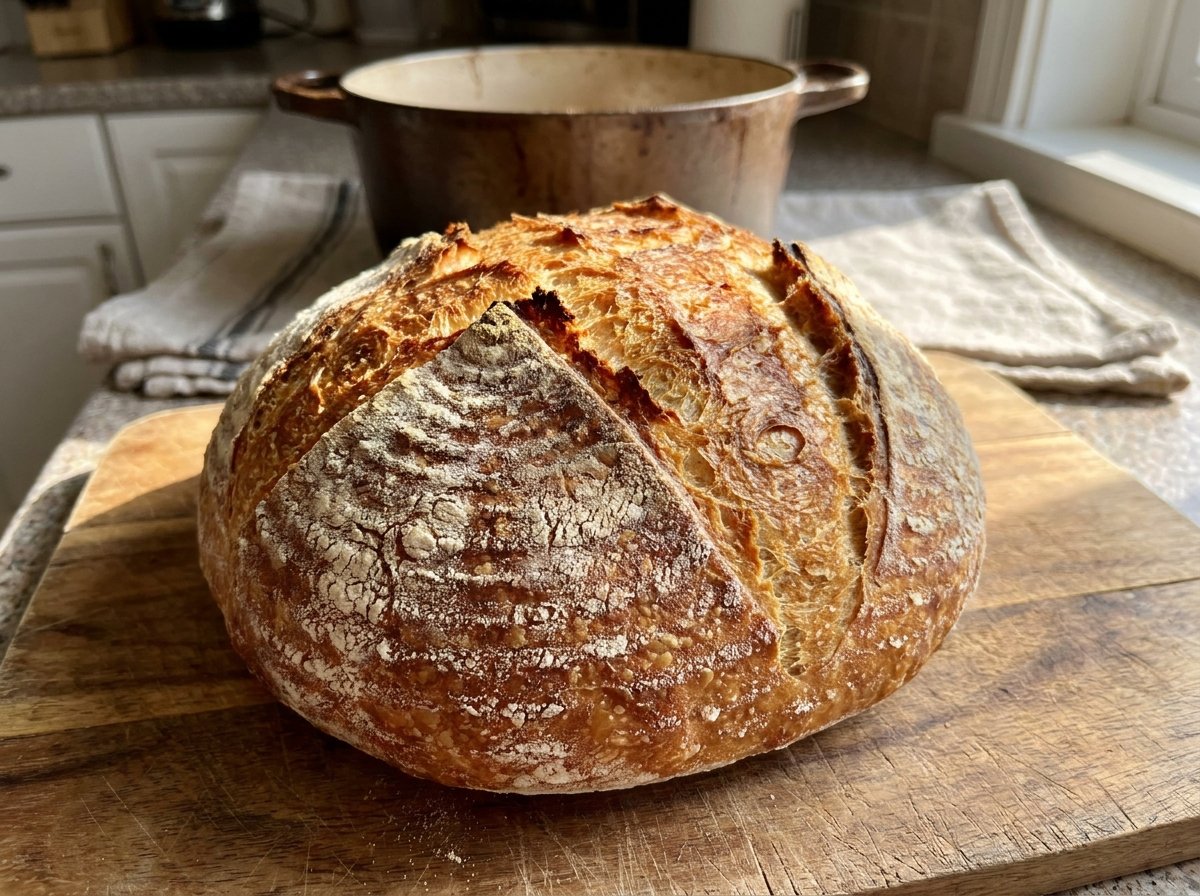
My grandma baked bread every single week of her life, kneading dough by hand for what felt like forever, flour dusted across her entire kitchen. I always assumed that was just what bread-making required. Then a neighbor introduced me to a completely different method one weekend, mixing four ingredients together in under five minutes and walking away for the rest of the day. I was skeptical until I pulled a loaf out of my Dutch oven the next morning that looked like it came straight from a bakery window. That loaf became this exact dutch oven no knead artisan bread recipe overnight rise 12 hours, and it’s completely changed how I think about homemade bread.
Table of Contents
Why This Dutch Oven No Knead Artisan Bread Recipe with a 12-Hour Overnight Rise Works
I think what surprised me most is realizing time, not effort, was doing all the real work here.
What Makes No Knead Bread So Approachable for Beginners With no kneading, no stand mixer, and no bread-making experience required, this recipe removes nearly every barrier that keeps people from baking their own bread.
The Magic of a Long, Slow Overnight Rise
- Gluten develops naturally over time instead of through kneading
- Minimal hands-on effort, mostly just waiting
- Deep flavor that develops slowly, overnight
Quick Overview: Total Time and Yield This recipe takes about 12-13 hours total, mostly hands-off rising time, and makes one large loaf, perfect for a weekend baking project.
Ingredients for Dutch Oven No Knead Artisan Bread
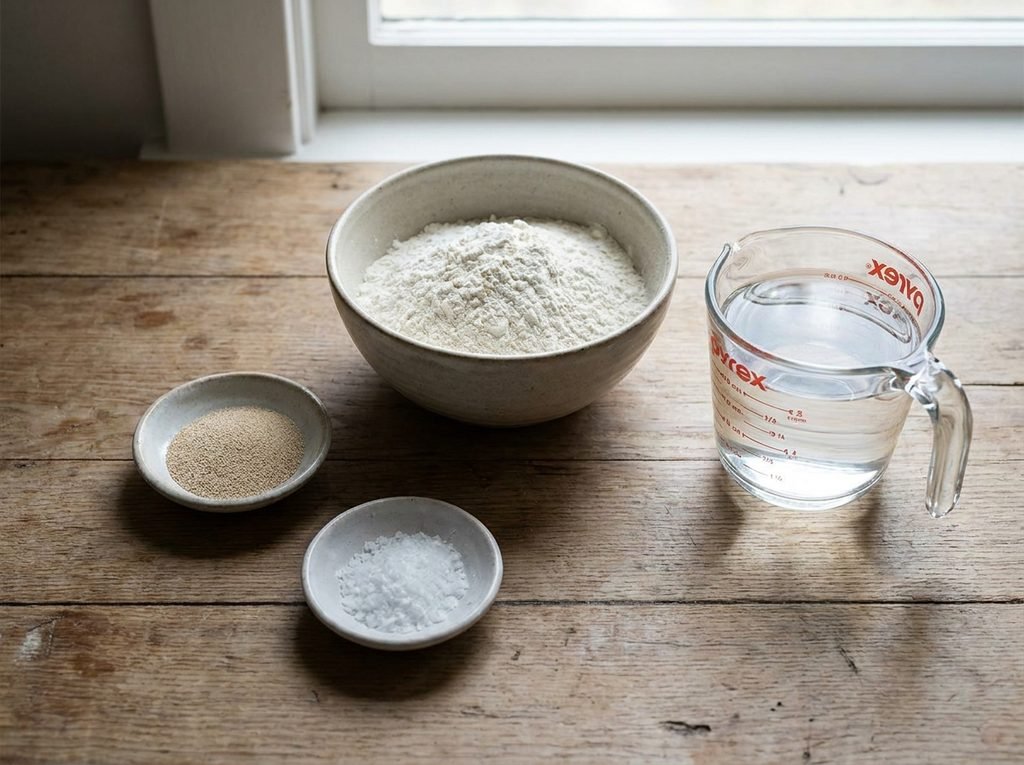
Let’s go over exactly what you’ll need for this dutch oven no knead artisan bread recipe overnight rise 12 hours, because this really is about as simple as bread gets.
Why Just Four Simple Ingredients Are All You Need Flour, water, salt, and yeast are truly all it takes — there’s no need for oil, sugar, or any additional ingredients.
Choosing the Right Flour All-purpose flour works perfectly well, though bread flour, with its higher protein content, can give you a slightly chewier crumb if you have it on hand — King Arthur Baking notes that bread flour typically runs about 12.7% protein compared to roughly 11.7% for all-purpose.
Why This Recipe Uses So Little Yeast Just a small fraction of a teaspoon of yeast is needed, since the long fermentation time allows it to work slowly and thoroughly throughout the dough.
Water Temperature and Why It Matters
- Room temperature or slightly cool water works best
- Warm water can speed fermentation unpredictably
- Consistency in temperature helps you predict rise time more accurately
Step-by-Step Instructions for No Knead Artisan Bread in a Dutch Oven
Here’s exactly how this dutch oven no knead artisan bread recipe overnight rise 12 hours comes together, start to finish.
Step 1: Mix the Shaggy Dough In a large bowl, combine the flour, salt, and yeast, then add water and stir just until a shaggy, sticky dough forms — no kneading required.
Step 2: Cover and Let Rise for 12 Hours Overnight Cover the bowl loosely with plastic wrap and let it sit at room temperature for about 12 hours, or until the dough has roughly doubled in size.
Step 3: Shape the Dough Gently the Next Morning Turn the dough out onto a floured surface and gently shape it into a rough ball, being careful not to deflate too much of the air.
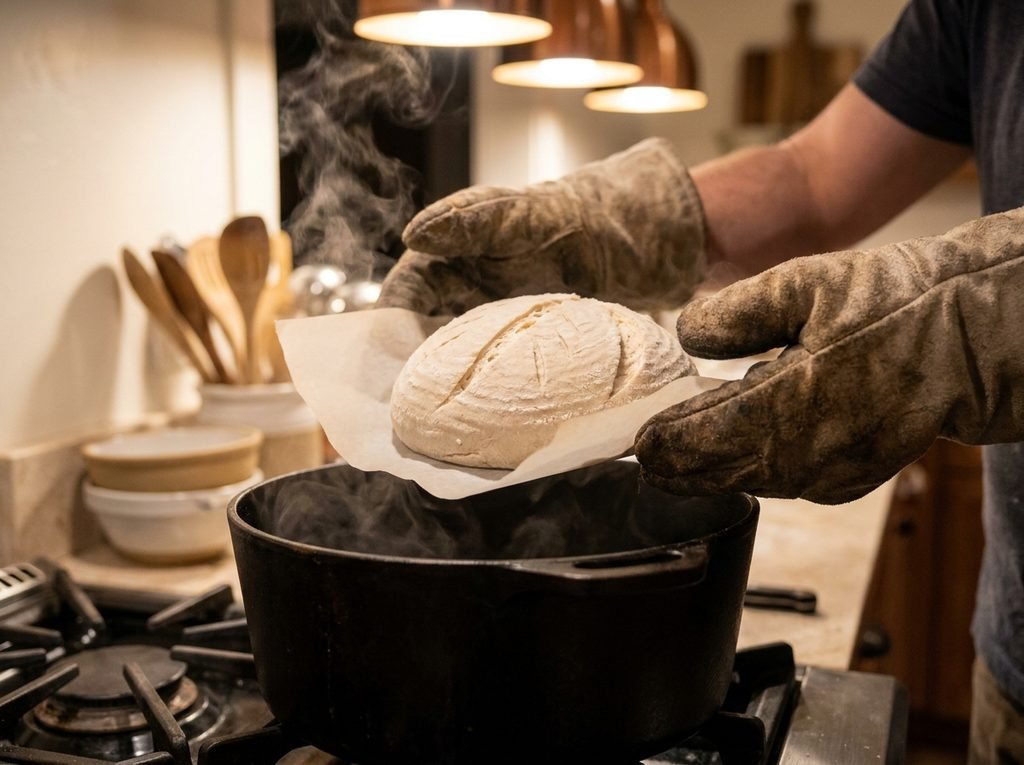
Step 4: Preheat the Dutch Oven Before Baking About 30 minutes before baking, place your empty Dutch oven, with its lid on, into the oven and preheat to 450°F.
Step 5: Bake Covered, Then Uncovered Carefully place the dough into the hot Dutch oven, cover, and bake for 30 minutes, then remove the lid and bake for another 10-15 minutes until deeply golden.
Why the 12-Hour Rise Time Matters (And How Temperature Changes It)
This is honestly the detail that took me the longest to really understand, so let’s dig into it!
Why Less Yeast Requires a Longer Fermentation Time With such a small amount of yeast, fermentation naturally takes longer, which is exactly the trade-off that allows this recipe to skip kneading entirely.
How Room Temperature Speeds Up or Slows Down the Rise A warmer kitchen can shorten that 12-hour window meaningfully, while a cooler space may require closer to 14-18 hours to reach the same result — Bob’s Red Mill explains that yeast activity is highly temperature-sensitive, working far more slowly in cooler conditions and speeding up considerably as the dough warms.
Signs Your Dough Has Risen Long Enough Look for a dough that has roughly doubled in size and developed a bubbly, slightly domed surface, rather than relying on the clock alone.
What Happens If You Let the Dough Rise Too Long Over-fermented dough can become overly slack and lose structure, resulting in a flatter loaf with a denser crumb than intended — for a simple lean dough like this one, made only from flour, water, salt, and yeast, longtime bakers note that an extra hour or two at room temperature is generally low-risk, though quality still declines the longer it goes past its peak.
Tips for the Best Crust and Crumb in No Knead Bread
Why a Preheated Dutch Oven Creates That Bakery-Style Crust The intense, trapped heat inside a preheated Dutch oven mimics a professional bread oven, creating steam that produces a crackly, golden crust.
Scoring the Dough for Better Oven Spring A simple slash across the top of the dough before baking allows it to expand predictably, rather than tearing unpredictably in the oven.
Why You Shouldn’t Skip the Uncovered Baking Time That final uncovered stretch in the oven is what allows the crust to deepen in color and develop its signature crunch.
Common Mistakes That Lead to Dense or Flat Bread Using too much yeast, under-proofing the dough, or skipping the Dutch oven’s preheating step are the most common reasons results fall short.
Recipe Variations for No Knead Artisan Bread
Once you’ve made this dutch oven no knead artisan bread recipe overnight rise 12 hours a few times, it’s fun to experiment.
Adding Herbs, Garlic, or Cheese Fresh rosemary, roasted garlic, or shredded cheese folded gently into the dough before its final shaping adds wonderful flavor variety.
Whole Wheat or Multigrain Variations Substituting a portion of the flour with whole wheat adds heartiness, though you may need to adjust water slightly since whole wheat absorbs more liquid.
Adjusting for a Refrigerator Cold Rise A slower rise in the refrigerator, often 24 hours or more, develops even deeper flavor if you prefer to plan further ahead.
Making Smaller Individual Loaves Dividing the dough into smaller portions creates individual rolls or mini loaves, adjusting the bake time down accordingly.
Storage Tips for No Knead Artisan Bread
Once your dutch oven no knead artisan bread recipe overnight rise 12 hours is baked and cooled, a little care keeps it tasting fresh.
How to Store Bread to Keep the Crust Crispy Store bread cut-side down on the counter, uncovered or loosely wrapped in a paper bag, to help maintain that crisp crust.
Best Way to Refresh Day-Old Bread A few minutes in a hot oven revives the crust beautifully if the bread has softened after a day or two.
Can You Freeze No Knead Artisan Bread? Yes — this bread freezes well for up to 3 months, ideally sliced first so you can pull out only what you need.
How Long Does Homemade Bread Last? Without preservatives, this bread is best enjoyed within 2-3 days at room temperature, though freezing extends that significantly.
Frequently Asked Questions About Dutch Oven No Knead Artisan Bread Recipe with Overnight Rise
Can I Speed Up the Rise Time If I’m Short on Time?
sing slightly more yeast can shorten the rise time, though it will change the flavor and texture somewhat compared to the traditional long, slow method.
Do I Need a Cast Iron Dutch Oven Specifically?
Cast iron works wonderfully due to its heat retention, though any heavy, oven-safe pot with a lid can work in a pinch.
Why Is My Dough Too Wet or Too Dry?
Flour absorbs moisture differently depending on humidity and measuring technique, so small adjustments in water may be needed batch to batch.
Can I Let the Dough Rise for Longer Than 12 Hours?
Yes, up to about 18 hours generally works well, though beyond that, the dough risks becoming overly slack.
What If I Don’t Have a Dutch Oven at All?
A heavy oven-safe pot with a tight-fitting lid, or even a baking stone with a metal bowl as a makeshift cover, can work as substitutes.
Is No Knead Bread Actually Gluten-Free Friendly?
No, this recipe relies on wheat flour’s gluten development during the long rise, so it is not suitable for gluten-free diets as written.
Final Thoughts and Serving Suggestions
Best Ways to Serve Fresh No Knead Artisan Bread Warm slices with butter, alongside a bowl of soup, or as the base for a hearty sandwich all showcase this bread beautifully.
Why This Recipe Is Perfect for Weekend Baking Projects At the end of the day, this dutch oven no knead artisan bread recipe overnight rise 12 hours proved that impressive bread doesn’t require my grandma’s hours of hands-on effort. She still kneads by hand out of habit more than necessity these days, but I have a feeling this simpler method has quietly won her over too.
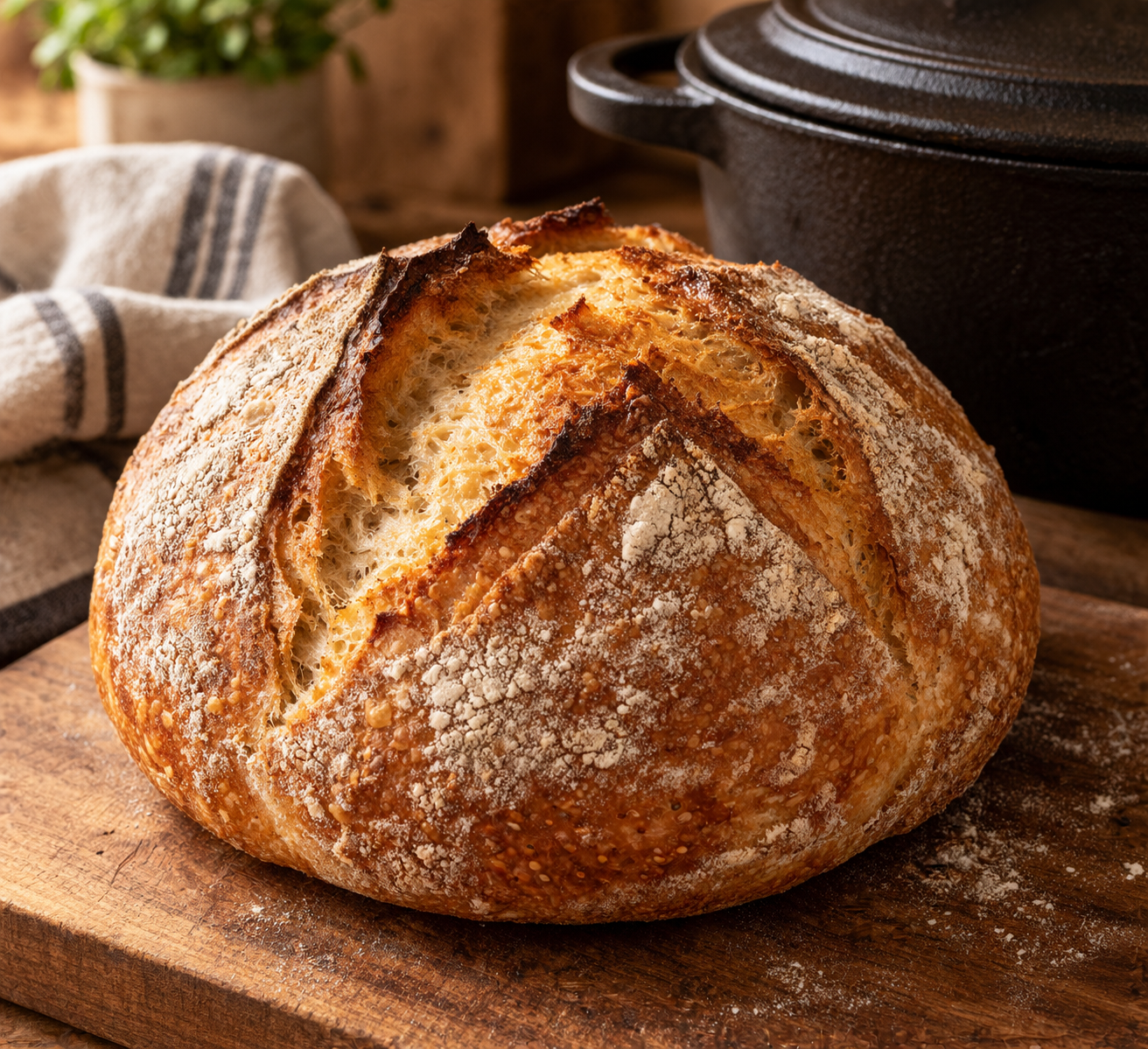
Dutch Oven No Knead Artisan Bread (12-Hour Overnight Rise)
Ingredients
Method
- Mix the dough — In a large bowl, combine the flour, salt, and yeast. Add the water and stir until a shaggy, sticky dough forms. No kneading needed.Rise overnight — Cover the bowl loosely with plastic wrap and let it sit at room temperature for about 12 hours, or until doubled in size.Shape the dough — Turn the dough out onto a floured surface and gently shape it into a rough ball, being careful not to deflate it too much.Preheat the Dutch oven — About 30 minutes before baking, place your empty Dutch oven with its lid on into the oven and preheat to 450°F.Score and bake covered — Carefully transfer the dough into the hot Dutch oven, score the top with a sharp knife, cover, and bake for 30 minutes.Bake uncovered — Remove the lid and bake for another 10-15 minutes, until deeply golden brown.Cool completely — Let the bread cool on a wire rack before slicing.
Notes
- Rise time varies with room temperature — warmer kitchens may need less than 12 hours, cooler ones may need up to 18.
- The dough should double in size and look bubbly on top when ready, more reliable than watching the clock alone.
- A heavy, oven-safe pot with a tight-fitting lid can substitute for a Dutch oven if needed.
- Store at room temperature, cut-side down, for 2-3 days, or freeze sliced for up to 3 months.